If you’ve just finished the IELTS Reading score Academic module and are trying to figure out what your raw marks mean, you are not alone. The conversion from correct answers to a band score can feel like a secret code. But once you understand the scoring system, you can stop guessing and start targeting the exact band you need.
Quick Answer: Your ielts Reading score Academic is calculated by converting your raw mark (number of correct answers out of 40) to a band score from 1 to 9. The conversion is not linear; it varies slightly between test versions. A score of 30 out of 40 typically equals Band 7.0, while Band 8.0 usually requires 35 correct answers.
How the ielts Academic Reading Score Differs from General Training
Many test-takers assume both versions of the Reading test use the same scoring scale. They do not. This is a critical distinction that can cost you a full band if you prepare for the wrong test.
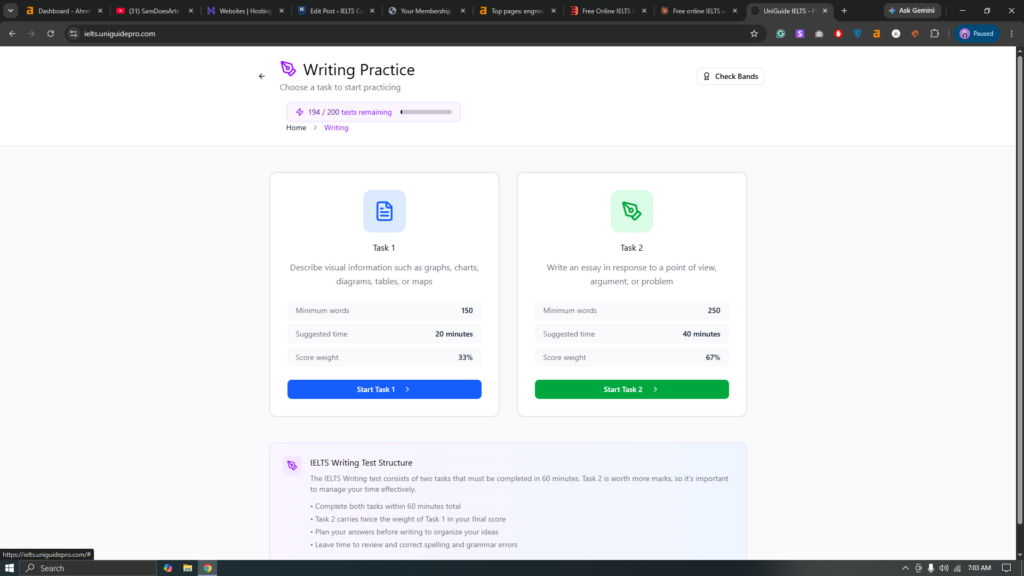
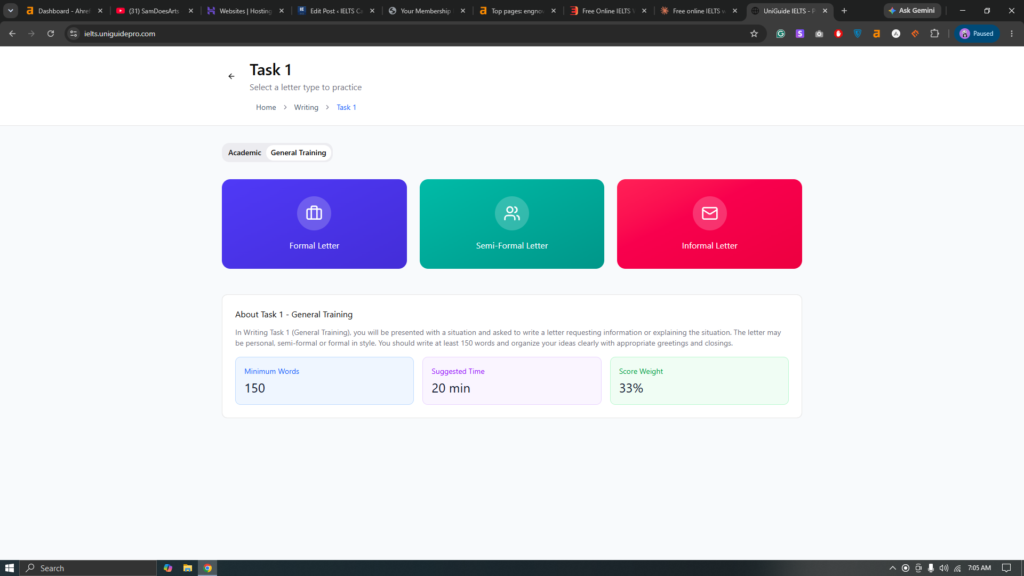
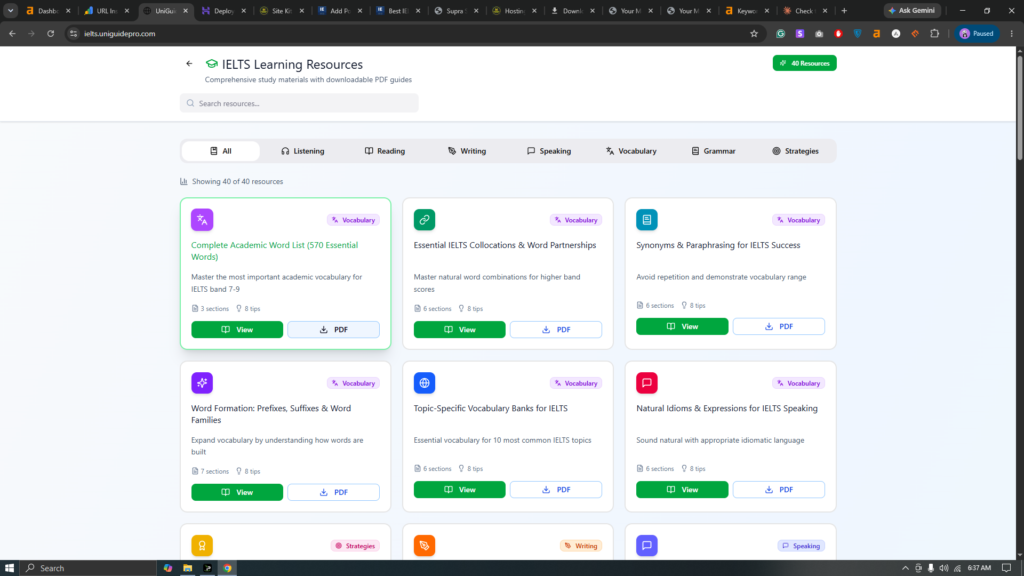
Free ielts training uniguide
The Academic vs. General Training Gap
The IELTS Academic Reading test uses passages sourced from books, journals, magazines, and newspapers written for a non-specialist audience. The language is complex, and the vocabulary is academic in nature. The General Training Reading test, by contrast, includes sections on social survival, workplace texts, and general interest topics.
Because the Academic passages are harder, the raw score required to achieve a given band is lower. Here is the typical comparison:
| Band Score | Academic Raw Score (out of 40) | General Training Raw Score (out of 40) |
|---|---|---|
| 9.0 | 39 – 40 | 40 |
| 8.0 | 35 – 38 | 37 – 38 |
| 7.0 | 30 – 34 | 34 – 35 |
| 6.0 | 23 – 29 | 30 – 31 |
| 5.0 | 15 – 22 | 23 – 24 |
Pro Tip: Never assume your General Training practice test scores translate directly to Academic. If you’re aiming for a Band 7.0 on the Academic test, you need roughly 30 correct answers. On General Training, that same band requires 34 correct answers.
Why the Scale Isn’t Fixed
The IELTS partners (British Council, IDP, and Cambridge English) use a process called equating to ensure fairness across different test versions. If one test version is slightly harder than another, the raw score required for each band shifts by one or two marks. This means two different test dates could have slightly different cut-offs for the same band score.
The Three Sections of the Academic Reading Test
Understanding the structure of the test helps you allocate your time strategically. The Academic Reading test consists of three passages with a total of 40 questions. You have exactly 60 minutes to complete everything, and there is no separate time for transferring answers to the answer sheet.
Passage 1: The Warm-Up
The first passage is typically the easiest. It may contain descriptive or factual information on a single topic. Questions here often test basic comprehension skills like skimming for specific details or matching headings.
Recommended time allocation: 15 minutes maximum.
Passage 2: The Bridge
The second passage increases in complexity. It may involve argumentation, comparison, or chronological events. Question types include true/false/not given, sentence completion, and summary completion.
Recommended time allocation: 20 minutes.
Passage 3: The Challenge
The third passage is the hardest. It often contains multiple viewpoints, abstract ideas, or dense academic arguments. You will see the most complex question types here, such as matching features, matching sentence endings, and categorization.
Recommended time allocation: 25 minutes.
Pro Tip: Do not spend more than 20 minutes on Passage 3 if you are stuck. It is better to guess on one difficult question and use that saved time to double-check easier answers in Passages 1 and 2.
How Raw Marks Convert to Your IELTS Reading Score Academic Band
The conversion table below shows the typical relationship between raw marks and band scores for the Academic Reading test. Remember, this is an approximation. Actual cut-offs may vary by one mark in either direction.
| Raw Score (Correct Answers) | IELTS Academic Reading Band |
|---|---|
| 39 – 40 | 9.0 |
| 37 – 38 | 8.5 |
| 35 – 36 | 8.0 |
| 33 – 34 | 7.5 |
| 30 – 32 | 7.0 |
| 27 – 29 | 6.5 |
| 23 – 26 | 6.0 |
| 19 – 22 | 5.5 |
| 15 – 18 | 5.0 |
| 12 – 14 | 4.5 |
| 9 – 11 | 4.0 |
| 6 – 8 | 3.5 |
Why You Should Target 32, Not 30
If you need a Band 7.0 for university admission, do not aim for exactly 30 correct answers. Aim for 32. Here is why:
- Test-day nerves can cost you 1–2 marks.
- Equating variations may push the Band 7.0 threshold to 31.
- Rounding rules mean a score of 29.5 rounds down to 6.5.
Pro Tip: When practicing, record your raw score after each full test. If you consistently score 32 or above in practice, you are well-prepared to achieve a Band 7.0 on test day.
The Most Common Question Types and Their Difficulty Levels
Not all questions are created equal. Knowing which types are harder helps you prioritize your time and energy.
Easier Question Types (High Accuracy Expected)
- Multiple choice (single answer): These test straightforward comprehension.
- True/False/Not Given (with clear signals): If the text contains direct evidence, these are quick wins.
- Sentence completion (with word list): The word bank limits your options, making this faster.
Harder Question Types (Budget More Time)
- Matching headings to paragraphs: Requires understanding the main idea of each paragraph, which is time-consuming.
- Matching features (e.g., matching researchers to their findings): Demands careful scanning across multiple paragraphs.
- Yes/No/Not Given (on writer’s views): More abstract than True/False/Not Given, as you must infer the author’s opinion.
- Summary completion (without word list): You must find the exact word from the passage, which tests precise vocabulary knowledge.
Strategy for Mixed Question Sets
Each passage typically has two to three question sets. Start with the easiest question set for that passage first. This builds momentum and ensures you capture marks before tackling the harder questions.
How to Practice Calculating Your IELTS Reading Score Academic
You cannot improve what you do not measure. Here is a step-by-step process for tracking your progress.
-
- Take a full timed test (60 minutes).
- Mark your answers using the official answer key.
- Count your raw score: number of correct answers out of 40.
- Convert using the table above to estimate your band.
- Analyze your errors: categorize them as vocabulary, time management, or question-type mistakes.
- Set a target raw score for your next practice session.
The 80/20 Rule for Improvement
80% of your score improvement will come from fixing 20% of your error types. If you consistently lose marks on True/False/Not Given questions, spend focused time mastering that question type. Do not waste time on question types you already ace.
Pro Tip: Keep a simple error log. After each practice test, write down the question types you got wrong. After five tests, you will see a clear pattern. Attack that pattern relentlessly.
Key Takeaways
- Your IELTS Reading score Academic is a raw score out of 40 converted to a band scale of 1–9.
- The Academic test requires fewer correct answers than General Training for the same band score.
- Aim for 32 correct answers to safely achieve a Band 7.0.
- The conversion scale varies slightly between test versions due to equating.
- Prioritize fixing your most common error types using an error log.
Frequently Asked Questions
Q: What is the IELTS Reading score Academic out of?
A: The test has 40 questions in total, so your raw score is out of 40.
Q: Can I get a Band 9.0 in Academic Reading?
A: Yes, but you need 39 or 40 correct answers. This is extremely rare; only about 1% of test-takers achieve this.
Q: Is there a negative marking in IELTS Reading?
A: No. There is no penalty for wrong answers. Always guess if you are unsure.
Q: How long does it take to get my IELTS Reading score?
A: For computer-based tests, results are available in 3–5 days. For paper-based tests, it takes 13 days.
Q: What is the difference between Band 6.5 and Band 7.0 in Reading?
A: A Band 6.5 typically requires 27–29 correct answers, while Band 7.0 requires 30–32 correct answers. The difference is often just 3–4 questions.
Q: Can I transfer answers after the 60 minutes?
A: No. You must write your answers on the answer sheet during the 60 minutes. There is no extra transfer time.
Q: Do all three passages count equally toward my score?
A: Yes. Each question is worth one mark, regardless of which passage it comes from.
Q: How can I improve my IELTS Reading score quickly?
A: Focus on time management and question-type mastery. Identify your weakest question type and practice it exclusively for one week.
References & Further Reading
- British Council. (2024). IELTS Academic Reading: Test Format and Scoring. Official IELTS Website.
- IDP Education. (2024). How IELTS is Scored. IELTS IDP.
- Cambridge Assessment English. (2024). Understanding Your IELTS Scores.
- Official IELTS Practice Tests (Volumes 1–18). Cambridge University Press.
—
About This Article: This guide was written by a former IELTS examiner and certified English language assessment specialist with over 10 years of experience preparing students for the Academic Reading module. The scoring data presented here is based on official IELTS band score descriptors and cross-referenced with multiple test administrations.