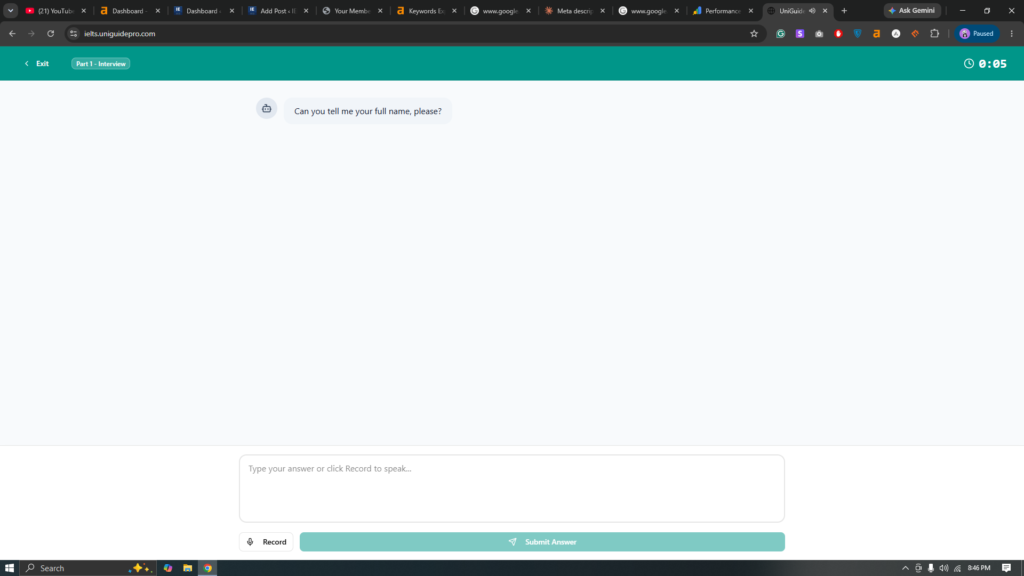
If you’ve ever searched “IELTS speaking questions” the night before your test, you already know the problem — there’s no shortage of lists out there, but most of them throw random questions at you with no real structure. You end up jumping from a question about your hometown to one about climate change to one about your favorite color, with no idea how they connect.
A more useful way to prepare is to go topic by topic. IELTS examiners tend to build a session around two or three connected themes — your Part 1 questions, your Part 2 cue card, and your Part 3 discussion often share a common thread. So instead of memorizing isolated questions, it helps to practice entire topic clusters. Here’s a practical, topic-wise breakdown you can use to prepare.
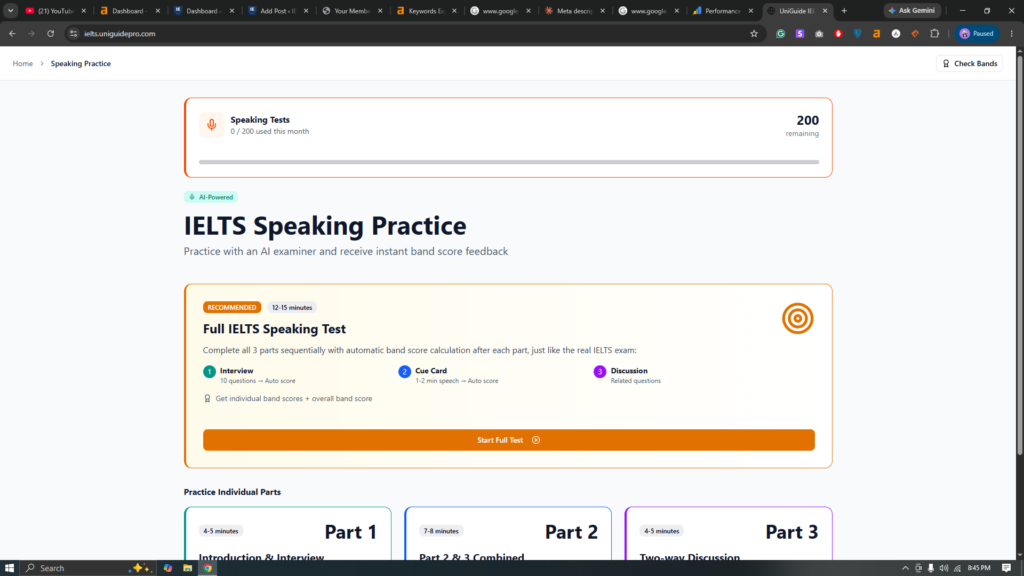
Prepare IELTS Free Speaking Mock test
Family and Friends
Part 1 questions
- Do you come from a large or small family?
- Who are you closest to in your family?
- How often do you see your friends?
Part 2 cue card Describe a family member you spend a lot of time with. You should say: who this person is, what you usually do together, how long you’ve known them, and explain why your relationship is important to you.
Part 3 questions
- Do you think family relationships have changed over the past few generations?
- Is it more common now for people to live far from their families?
Food and Cooking
Part 1 questions
- What kind of food do you enjoy the most?
- Do you cook often?
- Did you eat different food as a child compared to now?
Part 2 cue card Describe a meal you really enjoyed. You should say: what the meal was, where you had it, who you were with, and explain why you enjoyed it so much.
Part 3 questions
- Do you think eating habits have changed in your country in recent years?
- Is it healthier to cook at home than to eat out?
Travel and Holidays
Part 1 questions
- Do you enjoy traveling?
- Where did you go on your last holiday?
- Do you prefer traveling alone or with others?
Part 2 cue card Describe a trip you would like to take in the future. You should say: where you would go, who you would go with, what you would do there, and explain why this place interests you.
Part 3 questions
- How has tourism affected smaller towns or cities in your country?
- Do you think people travel more now than in the past? Why?
Education and Learning
Part 1 questions
- What subjects did you enjoy most at school?
- Are you currently studying anything?
- Did you have a favorite teacher growing up?
Part 2 cue card Describe something new you learned recently. You should say: what it was, how you learned it, how long it took, and explain how you felt about learning it.
Part 3 questions
- Do you think schools should focus more on practical skills than theory?
- How important is it for adults to keep learning new things?
Work and Career
Part 1 questions
- What do you do for work, or what do you plan to do?
- What do you enjoy about your job or course?
- Would you like to change your career in the future?
Part 2 cue card Describe a job you would like to have in the future. You should say: what the job is, what skills it requires, why it interests you, and explain how you might prepare for it.
Part 3 questions
- Do you think job satisfaction is more important than salary?
- How has the idea of a “career” changed for younger generations?
Technology and the Internet
Part 1 questions
- How much time do you spend online each day?
- What’s your favorite app or website?
- Has technology changed how you communicate with friends?
Part 2 cue card Describe a piece of technology you find useful. You should say: what it is, how often you use it, what you use it for, and explain why it’s useful to you.
Part 3 questions
- Do you think people are becoming too dependent on technology?
- How might technology change the way people work in the future?
Environment and Nature
Part 1 questions
- Do you spend much time outdoors?
- Are there any parks or green spaces near where you live?
- Do you do anything to help protect the environment?
Part 2 cue card Describe a place with beautiful natural scenery. You should say: where it is, how you got there, what you saw, and explain how it made you feel.
Part 3 questions
- What can individuals do to reduce their impact on the environment?
- Do you think environmental problems are taken seriously enough in your country?
Health and Lifestyle
Part 1 questions
- Do you do any sports or exercise regularly?
- How do you usually relax after a busy day?
- Has your lifestyle changed much in recent years?
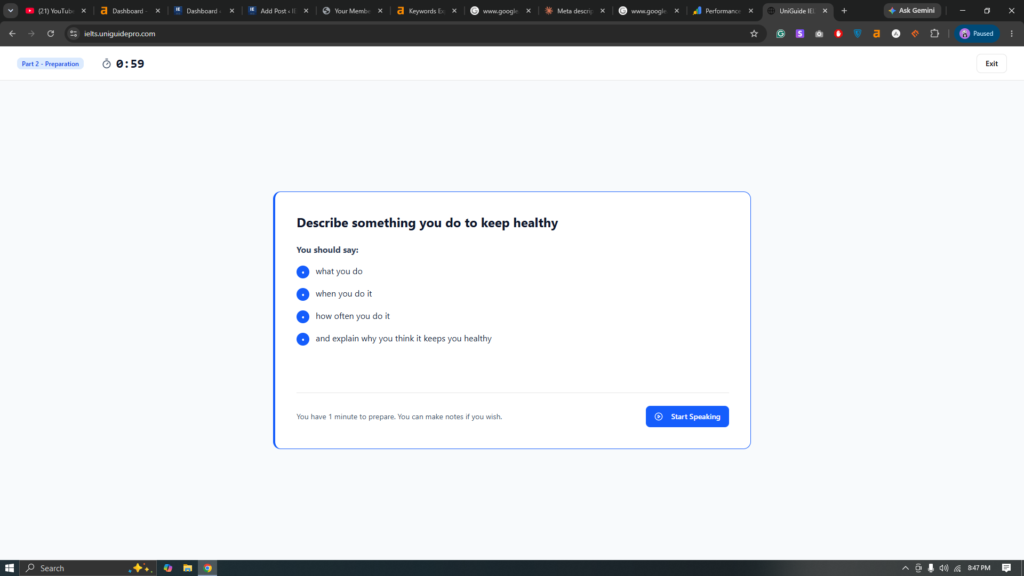
Part 2 cue card Describe a healthy habit you have or would like to develop. You should say: what the habit is, how you started it (or plan to), how often you do it, and explain how it benefits you.
Part 3 questions
- Do you think people today are more health-conscious than in the past?
- What role should governments play in promoting healthy lifestyles?
Shopping and Possessions
Part 1 questions
- Do you enjoy shopping?
- Do you prefer shopping online or in physical stores?
- What was the last thing you bought?
Part 2 cue card Describe something you bought that you are happy with. You should say: what it is, where you bought it, why you chose it, and explain how you feel about it now.
Part 3 questions
- How has online shopping changed the way people buy things?
- Do you think advertising influences people’s buying decisions too much?
Festivals and Celebrations
Part 1 questions
- What’s an important festival or celebration in your country?
- How do you usually celebrate your birthday?
- Do you prefer big celebrations or small, quiet ones?
Part 2 cue card Describe a celebration or festival you enjoyed. You should say: what it was, when it happened, who you celebrated with, and explain why it was memorable.
Part 3 questions
- Do you think traditional festivals are as popular as they used to be?
- How do celebrations bring communities together?
How to Use This List Effectively
Going through every single question here in one sitting isn’t the goal — that usually leads to burnout rather than real improvement. A better approach is to pick one topic per practice session and work through all three parts together, since that’s closer to how the actual test flows. Try answering the Part 1 questions out loud first, then give yourself one minute to prepare the cue card and speak for two minutes, and finish with the Part 3 questions. This way, you’re practicing the transitions between question types, not just isolated answers.
It also helps to notice which topics you struggle with the most. If you find yourself going blank on “Technology” or “Environment,” that’s a sign to build up some vocabulary and ideas around that theme specifically — rather than just hoping it doesn’t come up.
A Few Reminders Before Test Day
You don’t need to have a perfect, polished opinion on every topic — examiners are far more interested in how you express your ideas than whether they agree with you. Personal topics (family, food, hobbies) tend to feel easier because you’re talking about your own life, while abstract topics (environment, technology, education) require a bit more thought — practicing these in advance makes a noticeable difference. And if a Part 3 question catches you off guard, it’s completely fine to think out loud for a moment (“That’s an interesting question… I suppose…”) rather than rushing into an answer.
Frequently Asked Questions
Are these the exact questions that will appear in my test? Not necessarily — IELTS doesn’t publish official question banks, and topics rotate. But these reflect common themes that appear regularly across test sessions.
How many topics should I prepare before my test? Rather than trying to cover every possible topic, focus on building flexible vocabulary and ideas around common themes like the ones above — they tend to overlap with many specific topics.
Is it bad to give the same example for different questions? Reusing a personal experience across different topics is fine, as long as your answer is still relevant and natural — examiners are assessing your language, not the originality of your stories.
Should I prepare answers word-for-word? It’s better to prepare ideas and vocabulary rather than full scripts, since memorized answers often sound unnatural and can hurt your fluency score if the question is phrased differently than expected.
Final Thoughts
Practicing IELTS speaking questions topic by topic — rather than as a random list — mirrors how the real test actually flows and helps you build connected ideas instead of disconnected answers. Work through a topic or two a day, speak out loud (not just in your head), and by test day, these themes will feel familiar rather than intimidating.